Fishin Frenzy, and what the UK rulebook changes about it
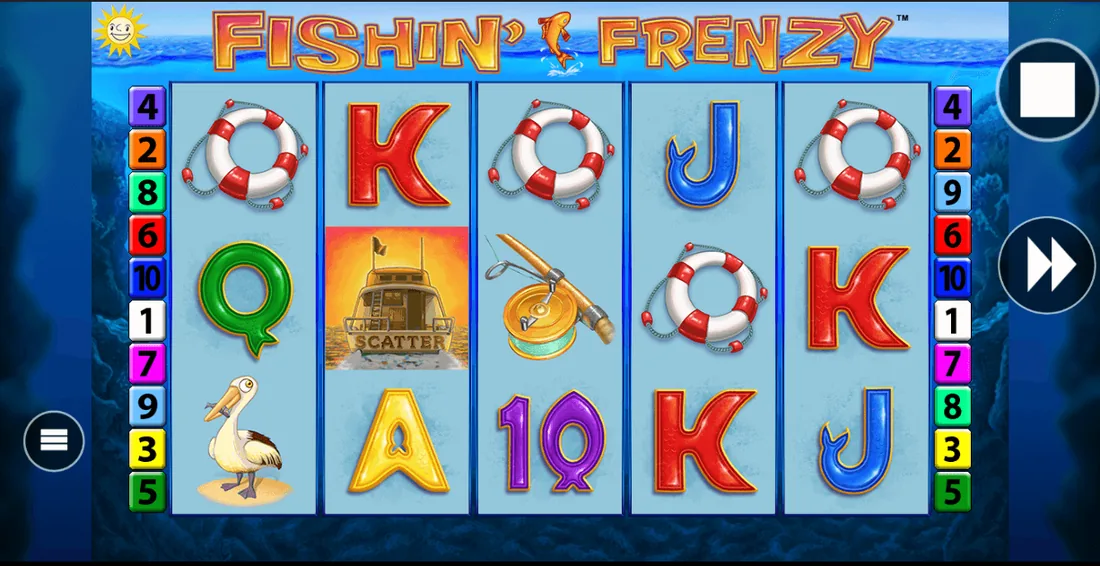
A small fishing boat sits in the middle of a five-reel grid, three symbols deep, with ten paylines running invisibly across it. Under the reels there is a stake box, a spin button and a balance in pounds. You press spin, the reels clatter, a gull and a tackle box fall past. Then a fisherman lands as a wild, a shoal of fish appears behind him, and the numbers printed on those fish are handed over in one go.
What has changed since the game first appeared is everything around it. A session played from Britain sits inside rules set by the UK Gambling Commission: a stake ceiling that depends on your age, deposit limits a site has to offer you, affordability checks that begin once net deposits pass a monthly threshold, and a credit-card ban in force since 2020. Those rules shape an evening more than any paytable, so treat them as part of the game rather than small print.
One round, from stake to cashout, in the right order
Mechanically this is an old-fashioned slot, and better for it. Ten lines are always active, so you cannot trim them to make a budget stretch, and they pay left to right from the first reel. The fisherman is the wild and substitutes for everything except the scatter, which is the symbol that starts the free spins. Nothing hides behind a second screen.
- Set the stake. The game's own ladder opens at £0.10 a spin; the top of the range is a legal question, covered in the next section.
- Spin, or start an autoplay run if the site provides one.
- Line wins pay when three or more matching symbols land on an active line, valued against your stake.
- A wild completes a line where a paying symbol is missing. In the base game that is all he does.
- Three or more scatters award ten free spins, and further scatters inside the feature extend the count.
- Whatever is left is your balance. Taking it out involves identity checks rather than one button press, which is where the first delay appears.
Where the regulator actually reaches into your session
The stake you can set is not purely the provider's business. Rules across the British market cap slot stakes at £5.00 a spin, and at £2.00 for players aged 18 to 24 — a deliberate attempt to blunt what a fast, repetitive game can do to a young account. On some sites the stake box stops climbing before the game runs out of ladder.
| Player | Cap per spin | Where it comes from | |
|---|---|---|---|
| Aged 18 to 24 | £2.00 | Age-based stake limit | → |
| Aged 25 and over | £5.00 | Standard slot stake cap | → |
| Lowest in-game stake | £0.10 | Provider's own ladder | → |
Beyond the stake, operators must offer deposit limits, and those have to be genuinely available before you deposit rather than buried in a support queue. Affordability checks begin at around £150 of net deposits in a month, with credit-reference data used at the first stage, so a routine month passes without friction and a heavy one will not. Credit cards have been barred for gambling since 2020, and the payment method has to carry your own name. If you want a hard stop rather than a soft one, GAMSTOP registers a single exclusion across every licensed British site, for six months up to five years.
Getting money in is simple enough: debit card, PayPal, Apple Pay, Open Banking through Trustly, or paysafecard. Age and identity checks run before your first deposit, so the account is verified early — it is the documents for the first withdrawal that take the time.
Fish, multipliers, and what 96.12% is really telling you
The free spins are where the game earns its reputation. Inside the feature, fish land carrying cash values, and every fisherman who appears collects all of them at once, so one wild can turn a flat round into the round you remember. The original has no climbing multiplier meter: growth comes from the values printed on the fish and from retriggering the ten spins.
The family has grown around it, and the versions are not interchangeable. Megaways editions rebuild the grid with thousands of ways to win and cascading symbols; Jackpot King editions bolt a progressive pot onto the same base game; other studios sell fishing slots built on a hold-and-win mechanic where values lock in place. Different maths, different feel. The plainest of them is usually the one worth learning first.
The published return is 96.12%, meaning that across millions of spins the game gives back roughly £96.12 of every £100 staked and keeps the remainder. That figure says nothing about your evening — it is a long-run average, not a refund. Volatility here is medium, which in practice means long stretches where nothing lands, broken by wins that cluster inside the feature. Ten free spins with no fisherman is ordinary, not broken. Do check the return on the game's information screen as well, because studios publish different figures for different editions, and a lower number is not a trick, just a worse deal.
Autoplay, the manual hand, and the cashout nobody plans for
Autoplay runs in sets, usually 10, 25, 50 or 100 spins, and a well-built version asks you to set a loss limit for the run before it starts, stops when that limit is hit, and stops if a single win rises above a ceiling you chose. Use it to keep your hands off the button. It is not a strategy: the reels have no idea how many spins you have queued.
Manual play is where the actual decisions sit. Some versions offer a gamble after a win — risk it to double, or lose it. That is a fair coin over time and the quickest way to hand back a good spin, so decide in advance whether you will ever press it. The decision that matters is when to stop, and it is far easier to make before the first spin than after the twentieth.
| Route out | Typical time once checks are done |
|---|---|
| E-wallet | A few hours to 24 hours |
| Faster Payments to a bank | Same day to 2 working days |
| Debit card | 1 to 3 working days |
The first withdrawal is the slowest, every time. Age and identity checks happen before you deposit, but most operators ask for documents before the first payout, and that review usually takes 24 to 48 hours. Build the wait into your expectations; it is verification, not punishment.
On a phone, in demo mode, and how to spot a licensed version
A five by three grid fits a phone without squashing. Portrait holds up, landscape gives you a wider paytable panel, and the game runs in a mobile browser as readily as in an app. Licensed operators can offer real-money apps through both the App Store and Google Play, so an app listing proves nothing on its own — the licence check still applies.
Demo play is widely available, but on many licensed British sites it is shown only to logged-in, age-verified accounts, which is why a first visit sometimes meets a registration wall instead of a playable demo. Demo credits behave like real ones in every respect but the one that counts: nothing you win there is money, and the return does not soften because the balance is fictional.
- A licence number in the footer that matches the operator's entry in the UKGC public register.
- Working links to GAMSTOP and BeGambleAware, not decorative logos.
- Deposit limits you can set yourself before the first deposit, not after.
- Clear 18+ messaging and no imagery angled at children — a fishing theme makes that a fair question.
- Payments in your own name, with no credit card option.
None of this is meant to spoil the game. It is about knowing which parts of a session you control, and the stake box, the deposit limit and the cashout button are the three that matter.
FAQ
Can I play Fishin Frenzy for free in the UK?
Yes, as a demo — a version with fictional credits and no cash value. Availability varies: many UKGC-licensed sites show free play only to logged-in, age-verified accounts, while others place it on the game page. The maths is identical either way, which is exactly why demo mode is a sensible place to learn how the free spins behave before you stake anything.
What is the highest stake I can set?
£5.00 a spin if you are 25 or over, and £2.00 if you are 18 to 24, under the stake caps applied across the British market. The game's own ladder starts at £0.10. Whatever the cap says, deposit limits and affordability checks can bite sooner: checks begin at around £150 of net deposits in a month, with credit-reference data used at the first stage.
Why is the first withdrawal so slow?
Because documents come before money. Age and identity checks pass before you deposit, but most operators want proof of identity and address before the first payout, and that review usually takes 24 to 48 hours. After that an e-wallet can land within hours, Faster Payments to a bank takes same day to two working days, and a debit card one to three working days. Later withdrawals are quicker, because the checks are already behind you.